
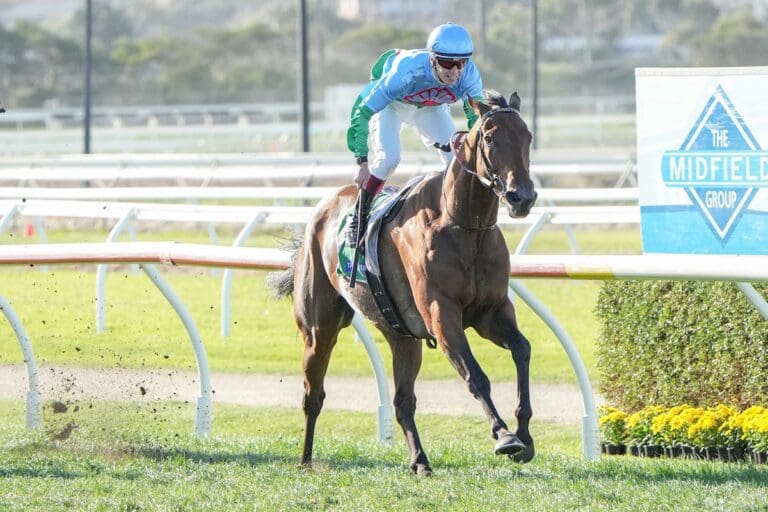
Tuvalu makes all in Wangoom Handicap
Group 1 winner Tuvalu etched his name into the annals of the Wangoom Handicap at Warrnambool, showcasing a blend of audacious riding and strategic training.

Today's horse racing tips & best bets | May 1, 2024
Five thoroughbred meetings are scheduled for around Australia today. Check out HorseBetting's free racing tips for horse racing on May 1, 2024.
Warrnambool free racing preview & betting tips | May 2, 2024
The Grand Annual Steeplechase (5500m) headlines the final day of the Warrnambool May Racing Carnival. Check out HorseBetting's free betting tips for the day.
Wagga Town Plate Day betting tips & quaddie | Thursday, May 2
The time-honoured Town Plate headlines Day 1 of the 2024 Wagga Gold Cup Carnival. See our free betting tips for the eight-race card on Thursday, May 2.



LATEST RACING NEWS
SA Derby 2024 betting preview & free tips | Saturday, May 4
The Group 1 SA Derby (2500m) headlines proceeding at Morphettville on Saturday. Check out HorseBetting's free preview and betting strategy for the race here.
Wagga Gold Cup Day preview & free betting tips | May 3, 2024
The 2024 Wagga Gold Cup is the headline act at the Murrumbidgee Turf Club this Friday. See our top betting tips for the May 3...
Warrnambool Racing Club guide 2024
Warrnambool Racing Club has been in operation since 1847 and continues to be the heart of the Victorian country racing scene since its inception. Affectionately...
Torque Time ready for Te Rapa assignment
Jo Rathbone will be one of several Central Districts trainers heading to Te Rapa for the first Northern jumps meeting of the season on Saturday.















BEST ONLINE BOOKIES


Neds Code GETON

18+ Gamble Responsibly. What are you prepared to lose today? Full terms.

18+ Gamble Responsibly. Imagine what you could be buying instead. Full terms.
Dabble Signup Code AUSRACING

18+ Gamble Responsibly. THINK. IS THIS A BET YOU REALLY WANT TO PLACE? Full terms.
Recommended!
Bet365 Signup Code GETON

18+ Gamble Responsibly. GETON is not a bonus code. bet365 does not offer bonus codes in Australia and this referral code does not grant access to offers. What’s gambling really costing you? Full terms.

18+ Gamble Responsibly. What are you really gambling with? Full terms.

18+ Gamble responsibly. Think. Is this a bet you really want to place. Full terms.

What are you prepared to lose today? Set a deposit limit. Full terms.


UniBet
18+. Gamble Responsibly. Chances are you are about to lose. Full terms.

Ladbrokes
18+ Gamble Responsibly. What are you prepared to lose today? Full terms.
Australia horse racing news
LATEST RACING NEWS au
All signs point towards Queensland for La Crique
Dual Group One winner La Crique looked to be near her brilliant best at the Te Awamutu trials on Tuesday, with a trip to Queensland...
Rolls set for Warrnambool Cup defence
Having saluted on Day of the Warrnambool May Carnival, the Maddie Raymond-trained Rolls will back up on Day 3 to defend his Warrnambool Cup crown.
Gold Wolf primed for SA Derby tilt
David and Coral Feek are gearing up to send out just their second ever Group 1 runner as Gold Wolf takes on Saturday’s Group 1...
Leaderboard claims maiden hurdle success at Warrnambool
The Kiwis hit early on the opening day of Warrnambool’s three-day May carnival, with the Mark Walker-trained Leaderboard winning the two-mile maiden hurdle.
New Zealand horse racing news
LATEST RACING NEWS nz
Torque Time ready for Te Rapa assignment
Jo Rathbone will be one of several Central Districts trainers heading to Te Rapa for the first Northern jumps meeting of the season on Saturday.
Babylon Berlin set to chase Australian riches
Plans for Babylon Berlin are yet to be locked in, but a trip to Australia is high on the wish list for the top-quality sprinter.
Kennedy & Furlong chasing home track Stakes success
Shane Kennedy and Anna Furlong will again target a black-type feature on their home track on Saturday with a pair of contrasting juvenile contenders.
Ruakaka mission to kick off big week for Cole
Cody Cole will head to Ruakaka with a competitive selection of runners on Wednesday before chasing a black-type target closer to home with Renovations.
Upcoming races nz
Hong Kong horse racing news
LATEST RACING NEWS hk
Ka Ying Generation makes featherweight Group 3 charge
Andrea Atzeni hopes Ka Ying Generation can take advantage of a favourable weight spread in Sunday’s Group 3 Queen Mother Memorial Cup (2400m).
Prize money increases for HKIR and FWD Champions Day
Prize money for three of Hong Kong’s premier Group 1 races will be increased for the 2024/25 racing season by a total of HK$10 million...
Beauty Eternal spoils Golden Sixty’s FWD Champions Mile party
Golden Sixty’s bid for a record fourth HK$22 million Group 1 FWD Champions Mile (1600m) crown was thwarted by a familiar foe at Sha Tin.
Romantic Warrior battles to historic third QEII Cup success
Romantic Warrior once again lived up to his name as he produced a titanic late surge saw to land a record-breaking third FWD QEII Cup...
Upcoming races hk
HorseBetting.com.au – Australian Horse Racing Betting & News
Australian horse racing is the best in the world, with our sprinting stocks streets ahead of other countries. HorseBetting.com.au is your bible to thoroughbred racing down under, including tips on every Australian horse racing meeting, reviews of the top racing bookmakers, latest horse racing news and a market leading odds comparison service. Horse racing in Australia runs every day of the year, barring Christmas Day and has billions of dollars wagered on it via betting sites and the TAB services. We would like to say we will tip you winner after winner but if that were possible we would be sitting on a beach somewhere sipping a cocktail and watching the bank balance soar. But the team at Horse Betting Australia understand how the horse racing industry in Australia works and will aim to improve your chances of getting one up on the bookmakers.
- Through many years of trial and error (sometimes quite an expensive learning curve), we have utilised the TABs and bookmakers of Australia, but we find the following to be generally the best in show. They all offer generous promos, and you know when you strike it lucky you are going to be paid promptly and in full. The best horse betting options for Australians in 2022 are:
Ladbrokes
Sitting comfortably in the best horse betting bookmakers in Australia, Ladbrokes shines when it comes to thoroughbreds down under. With outstanding betting apps and a reputation that is stellar, Ladbrokes is a great option for Australians looking to bet on horse racing. (Ladbrokes review)
Unibet
While Unibet does not get as much fanfare as other horse racing betting sites in Australia, they do provide a good service and have the backing of one of the biggest gambling companies in the world — Kindred Group. Unibet has horse betting apps available in the Australian market, which give you access to all the features of this bookie. (Unibet review)
Betfair
Betfair has a good point of difference to other horse racing betting sites in Australia, with this one of the biggest betting exchanges in the world. The big drawcard is that you can “lay-off” on runners, essentially betting on them losing. Betfair is still majority owned by Crown Resorts in Australia, which should give you confidence they can be trusted. (Betfair review)
Neds
May have began their journey in Australia by annoying the hell out of us with a big budget advertising campaign, but they continue to be a great betting option for horse racing fans. Neds orange theme and creative promotions have set them apart from day 1 in Australia, with this drawing Ladbrokes parent company Entain into buying them out. Bet on horse racing with Neds with confidence. (Neds review)
PlayUp
A sports betting company formed from the ashes of several other Aussie bookies, PlayUp has strong odds, serviceable apps and tend to provide a more personalised experience than other horse racing bookmakers. PlayUp is easily among the top horse betting sites in Australia. (PlayUp review)
CrossBet
One of the newest horse racing bookmakers we promote on this website, having launched in late 2021, CrossBet has made a splash quickly. The horse racing markets are extensive and the odds are generous at CrossBet and they are a worthy addition to the industry down-under. CrossBet also has some great racing promotions, with these generally surrounding meetings at metro racetracks. CrossBet review.
Sportsbet
Sportsbet: It has been one of the market leaders since starting in 1993 and in 2009 was taken over by Irish betting leviathan Paddy Power. The brand has gone from strength to strength and delivers highly competitive odds for the horses, and is renowned for its occasional early payout, before a race or sporting event is even decided. (Sportsbet review)
bet365
Bet365: One of the biggest bookies in the world, with its operation spanning some 200 countries. It prides itself on the depth and variety of its markets and with a customer base estimated at more than 14 million, it is certainly doing plenty right. Licensed in the Northern Territory and offering fixed prices well in advance of big races. (bet365 review)
Palmerbet
Palmerbet: Palmerbet is a bookie licensed in New South Wales and backed by the bookies group in this state. They offer a huge selection of racing markets on all Australian race meets and have an easy to use website. Has some solid promotions based around NSW and Victorian races on a weekly basis. (Palmerbet review)
- The most popular way to bet on Australian horse racing is with betting apps, with almost all of the top Australian bookmakers down under boasting outstanding downloadable applications. Generally Australian bookmakers will have horse betting apps for both Android and iOS smartphones and tablets, which are the two main operating systems used on smartphones and tablets.
This includes both corporate bookmakers and the TAB in Australia, with both providing betting apps to their customers. Horse betting app make laying down bets on the races much quicker, with access with one press of the screen. These racing apps allow you to have a shortcut on the home screen of your portable device and they will store your login details so you won’t have to fumble your way through placing a bet when you are in a hurry.
Many of the bookies’ apps and mobile websites like Sportsbet and Ladbrokes will allow you to listen or watch the horse racing live, which is a handy feature when you don’t have Sky Racing at your house. Generally to place a bet on a mobile device you either open the app or visit your chosen bookies mobile website and fund your account. The horse racing sections are well defined at all of our top horse racing betting sites.
International racing fans will need to bet with betting sites licensed in their jurisdiction, with USA horse betting sites, for instance, significantly different to betting sites in New Zealand.
Read our guides to Australian betting apps for further information about what is available via mobile at each bookmaker:
All Australian bookmakers that we promote on Horse Betting have got downloadable apps available, and with horse racing being such a prominent part of the wagering landscape, they all spend plenty of time getting this part of their offering punter ready. For instance, several betting sites we promote on Horse Betting Australia have got betting features available only on their downloadable apps.
Australian have copped the short end of the stick when it comes to Free Bets and Bonus Bet Offers. regulatory changes have see all bet bonuses and sign up promos banned. You can read more about this Bonus Bet Ban and the consequences where we have explained freebet offers from online bookmakers and what they can and cannot now offer.Modern freebets generally work as a deposit bonus. As an example, if you deposit $100 dollars you will receive an extra $100 to bet with. This extra amount is referred to as ‘bonus bets’ too dodge some of the red tape that surrounds free bets. However those bonuses themselves have now come under fire and have strict regulations around them. Horsebetting.com.au explains these changes and how they effect the punter on our horse racing bonus offers page.
Another way punters can benefit from signing up at online bookmakers is by downloading their apps, some of our recommended betting sites will give a punter a $50 bonus bet for simply getting their app on their smartphone. All of these freebet options generally have wagering requirements attached to them, which basically mean you have to wager the money a certain amount of times before you can withdraw it.
- Horsebetting.com.au is part of the Race Media stable of sporting, racing and chasing websites and our team of journalists is dedicated to keeping the rank-and-file punter informed when it comes to having a bet on Australian racing. Feel free to contact us with queries or feedback at [email protected].
Highlights of the Australian racing calendar
In years gone by it has been a case of the Melbourne Spring Carnival first, daylight second and the Sydney Autumn Carnival in third place. But the launch of The Championships in 2014 in Sydney has provided a worthwhile challenger to the Melbourne Cup Carnival and the rest of the star-studded spring in the Victorian capital. It has not caught up yet, but if The Championships can continue to prosper they may soon attract just as much attention around the country and abroad. While the big-name horse racing carnivals continue to attract plenty of attention, the beauty of Australian racing is that there is plenty of smaller carnivals, keeping the attention firmly on the track year-round.
- The biggest week of the racing year is still the Melbourne Cup Carnival. Four meetings at Flemington: Victoria Derby day on the Saturday, Melbourne Cup day on the Tuesday (always the first Tuesday in November), VRC Oaks day (Ladies Day) on the Thursday and wrapping up with Emirates Stakes day on the second Saturday. Derby day is considered by many as the best punting day of the year, with usually 10 races and fields of the highest calibre. Cup day can be a bonanza for the astute punter with the Great Race awash with cash from the once-a-year flutterer and value to be found everywhere. It’s never easy though, especially with the continuing dominance of stayers bred in the northern hemisphere. The month leading up to the Cup carnival is also a wonderful time to be following the racing scene. Races such as the Caulfield Cup and Cox Plate are great events in their own right. The Caulfield Cup is a multimillion-dollar handicap and the Cox Plate the weight-for-age championship of Australasia run at the great amphitheatre of Moonee Valley.
- The aforementioned Championships take centre stage with eight Group 1 races contested over two days at Randwick, home to a towering new grandstand and the Australian Turf Club, which was formed by a merger of the Australian Jockey Club and Sydney Turf Club. Day one includes the Doncaster Mile, T.J. Smith Stakes, ATC Australian Derby and ATC Sires’ Produce. Day two’s rich haul includes the Queen Elizabeth Stakes (a 2000m weight-for-age contest that has designs on taking the Cox Plate’s mantle), Sydney Cup, Australian Oaks and Queen Of The Turf Stakes. Other highlights of the glittering autumn include the world’s richest race for two-year-olds, the Golden Slipper Stakes, at Rosehill Gardens racecourse. Then there is the Sydney Triple Crown for three-year-olds: the Group 1 Randwick and Rosehill Guineas are the first two legs, with the ATC Derby the classic grand finale.
- A wonderful time in the southern capital. Standout races include Melbourne’s biggest race for the juveniles, the Blue Diamond Stakes. There is the sprint triple crown of the Lightning Stakes, Oakleigh Plate and Newmarket Handicap, while the Australian Guineas is an important race for three-year-olds, with the winner guaranteed a career at stud, provided, of course, it is male and a fully intact one at that . The Melbourne autumn comes to a fitting finale at Flemington with the Australian Cup and Newmarket Handicap sharing top billing on a great card, before the baton is passed on to Sydney.
- When the fanfare of the Sydney Autumn has died down, all eyes turn north for this carnival, the highlight of which is the state’s best race, the Stradbroke Handicap at the historic Eagle Farm circuit. Trainers will target the double of the Doomben 10,000 and Stradbroke. Throw the Doomben Cup, Queensland Derby and the Queensland Oaks into the mix, and it’s a carnival not to be missed. It’s quite common for horses which emerge during the winter in Brisbane to become major players in Melbourne in the spring. The warm weather does them the world of good.
- Sandwiched between the Sydney autumn and Brisbane winter comes come a string of feature races at Morphettville in the South Australian capital. There are the group 1 Australasian Oaks, Robert Sangster Stakes for fillies and mares, the South Australian Derby and the state’s biggest race, the 1200m Goodwood Handicap, won by the mighty Black Caviar in 2012.
- The sun-drenched West Australian capital steps up to the plate as far as racing goes late in the year. Its greatest race is the Group 1 Railway Stakes over 1600m at Ascot. On the same day, usually in late November, the Group 1 Winterbottom Stakes is contested over 1200m. The following week comes the final Australian Group 1 of the calendar year: the Kingston Town Classic over 1800m. But the carnival rolls on in the west, with another highlight the Perth Cup, a group 2 2400m race contested each New Year’s Day.
- There are no Group 1s but plenty of prizemoney and pizzazz has made this a real stand-out on the January racing calendar. The main races are the sales-restricted $2 million MM Two-Year-Olds Classic and the $1m race for three-year-olds. Plus there are the MM Cup and MM Sprint and a wonderful vibe with many of the heavy hitters of Australian and international racing on the Glitter Strip for the Magic Millions sales, trying to buy a runner in the next year’s big MM race.
- While Australian horse racing is universally regarded as some of the best in the world, there are many quality horse racing events held overseas, with racing prominent in places like Hong Kong Kong, the USA and United Kingdom. Our team of racing boffins will cover all the big events in world racing, whether it be the Kentucky Derby or the Hong Kong Mile. Check our our region specific guides to horse racing:
- Hong Kong racing
- USA racing
- New Zealand racing
- UK horse racing